
Last updated November 2, 2026
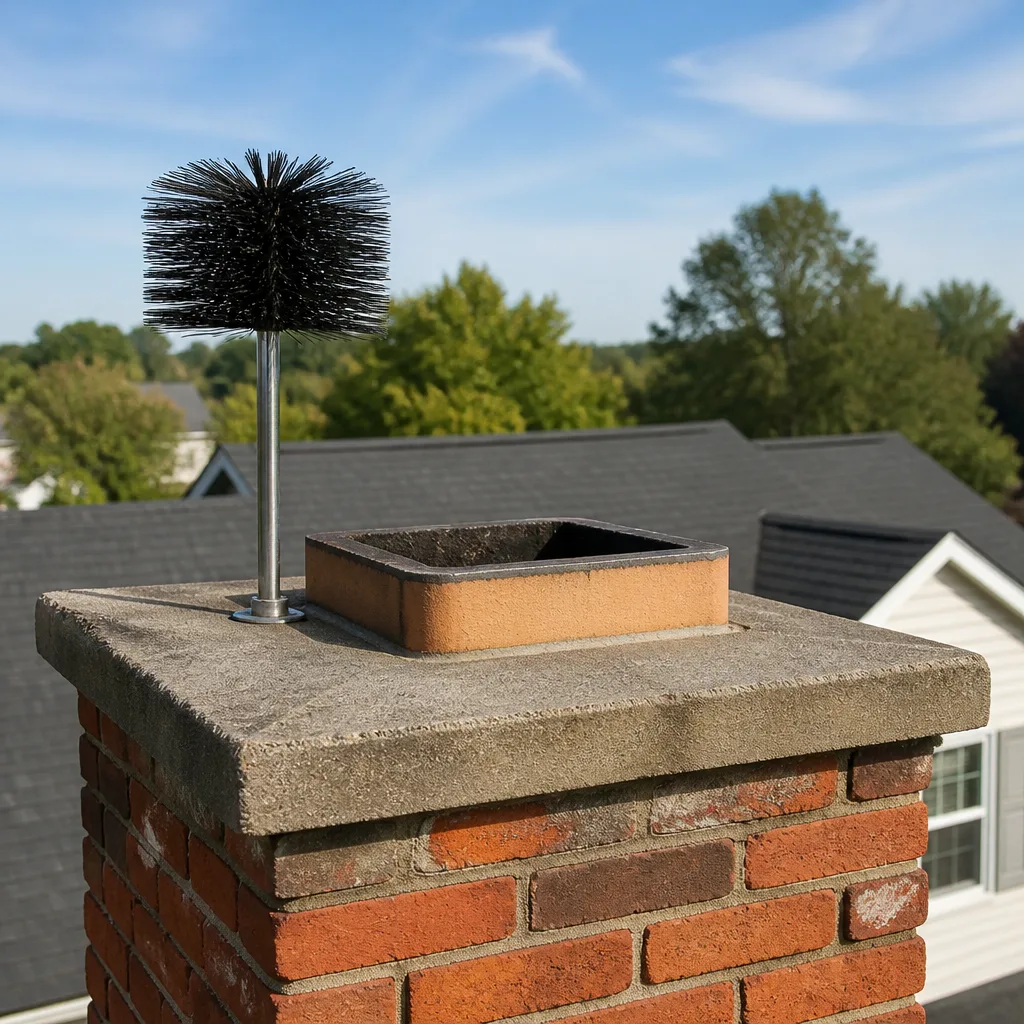 Sweep & inspection
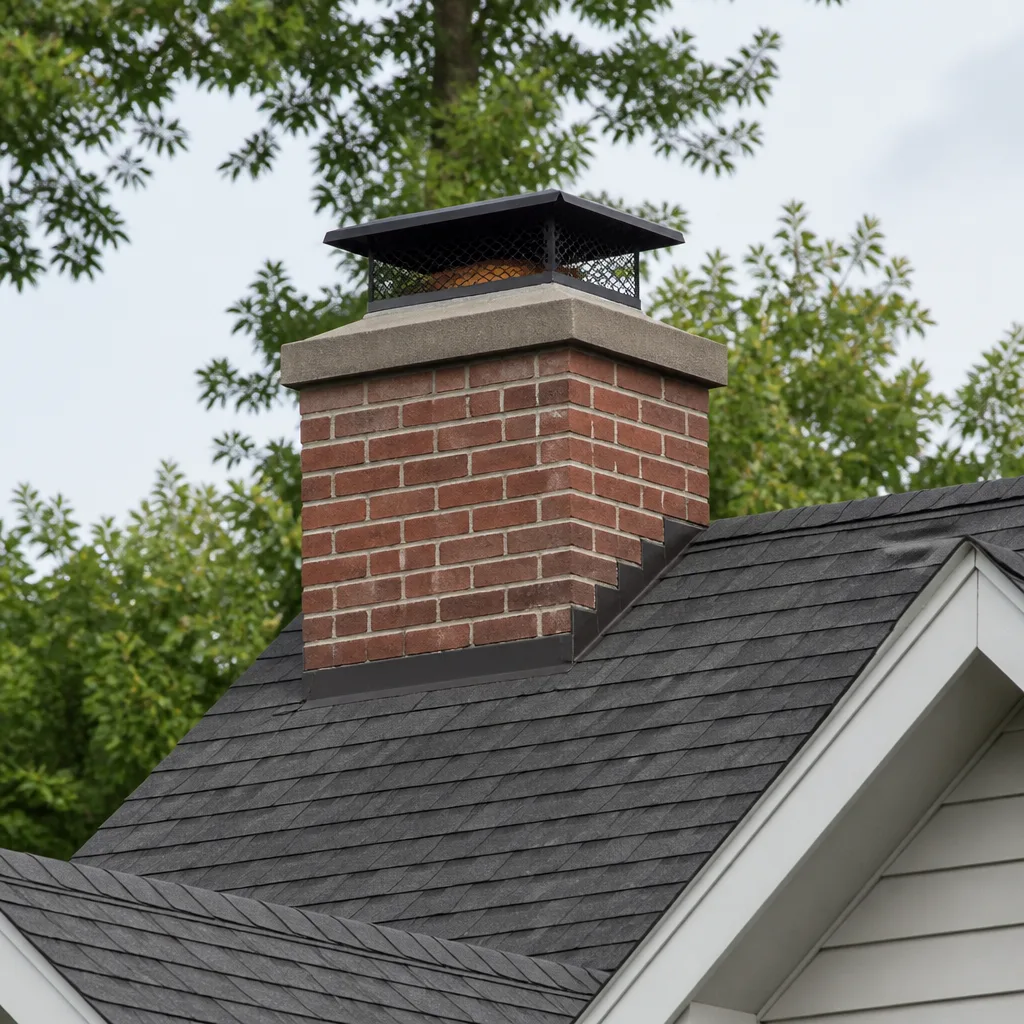 Caps & crowns
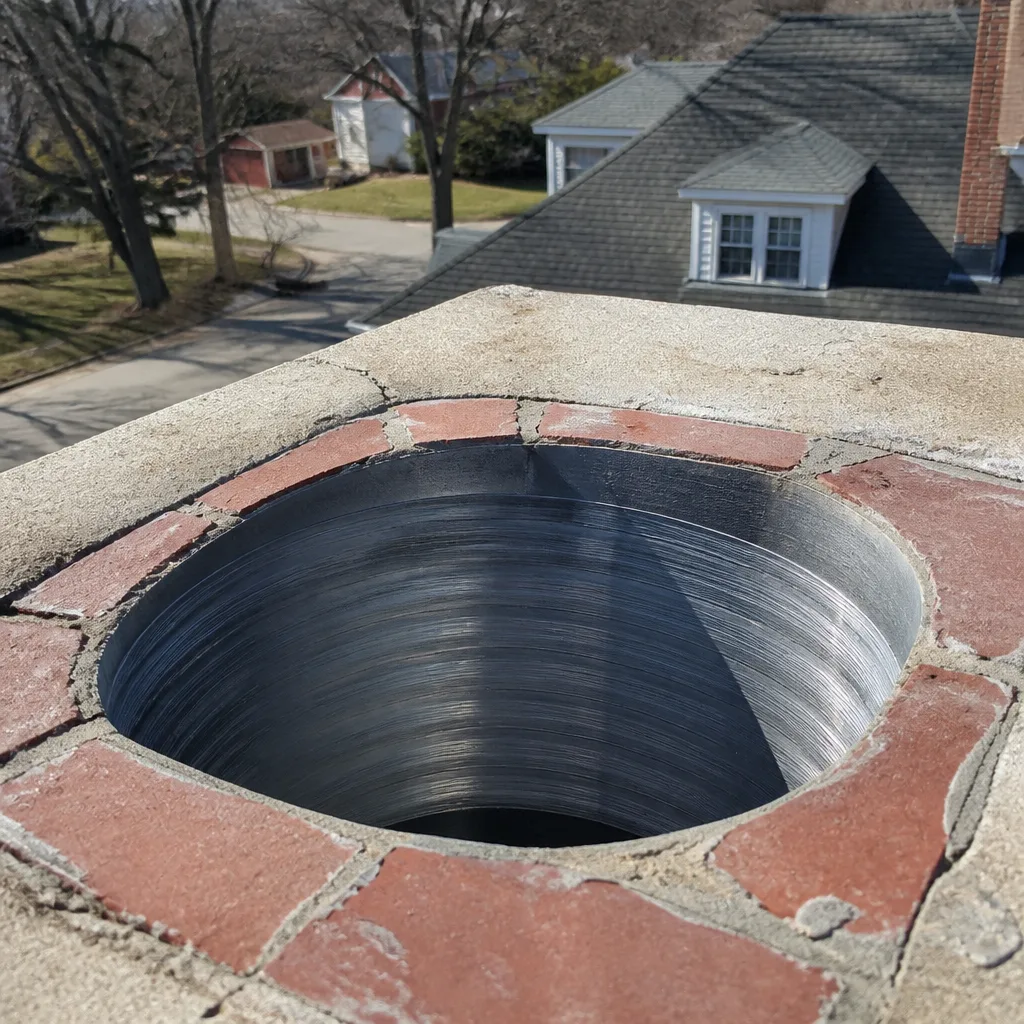 Flue relining
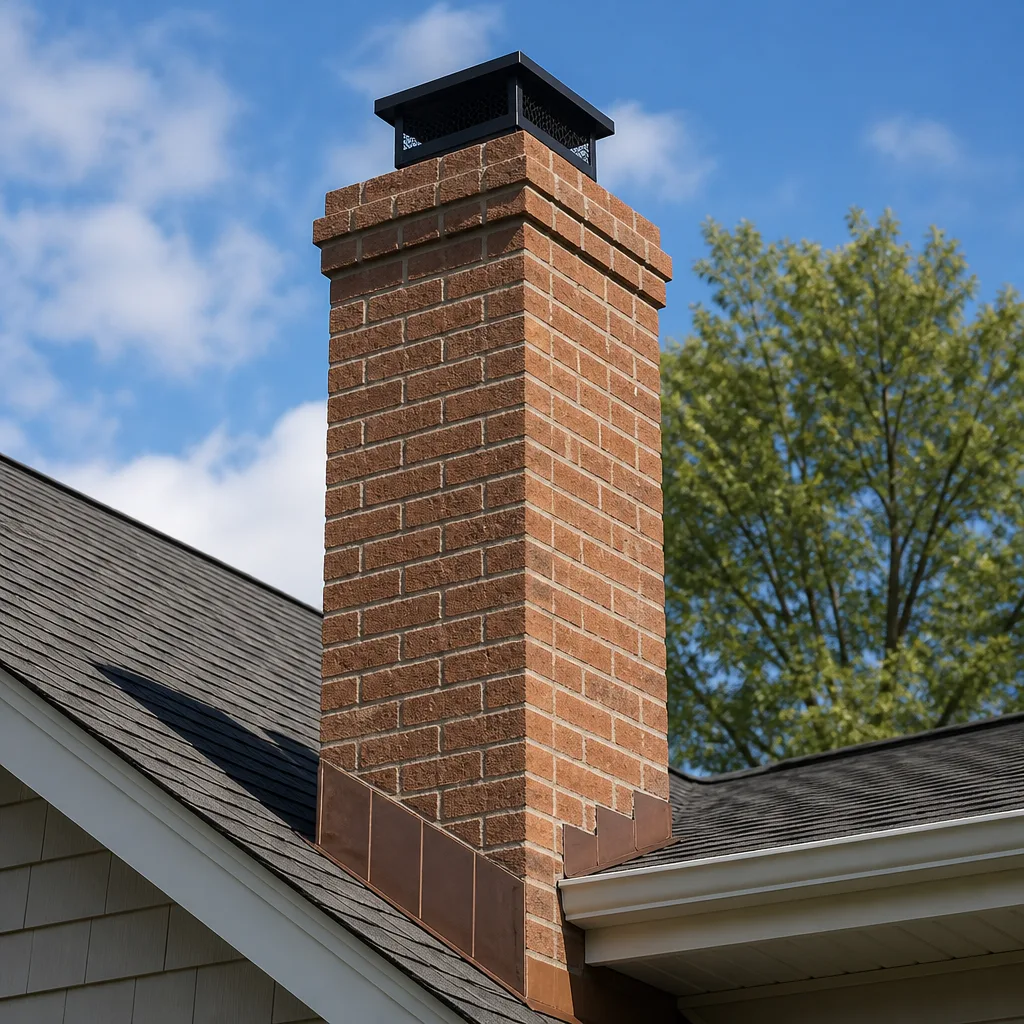 Masonry repair
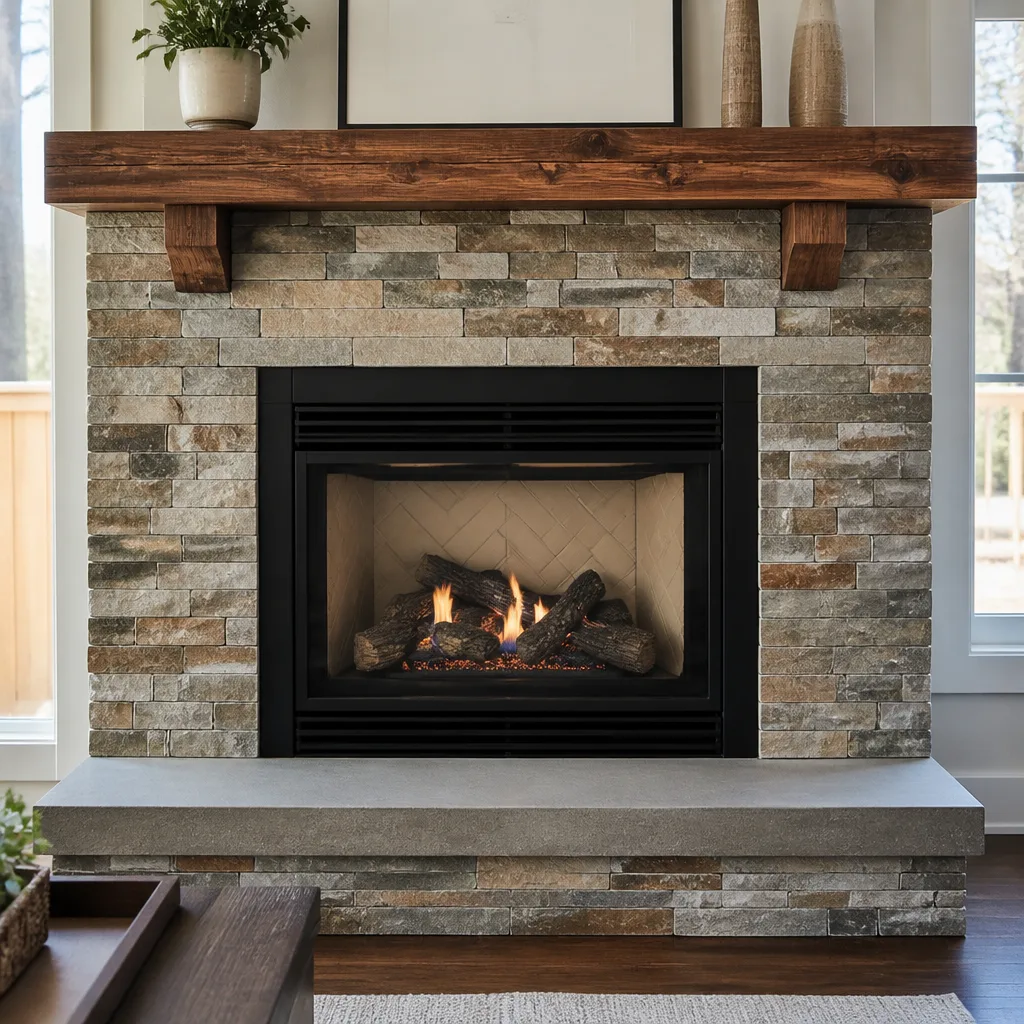 Gas fireplace service
Level 1 sweep and inspection to the NFPA 211 annual standard - flue, crown, cap, and flashing checked and photographed
Chimney sweep logs do not sweep chimneys. They loosen some creosote - which then falls where a brush and vacuum still have to collect it.
DIY vs Professional Chimney Cleaning: The Chino Hills Homeowner’s Decision Guide
You can buy the same chimney brushes a sweep uses on Amazon for about $40. That fact alone convinces a lot of Chino Hills homeowners that professional chimney cleaning is a scam wrapped in a service fee. But the brush is maybe 20% of what you’re actually paying for, and once you understand what the other 80% is, the DIY-versus-pro question stops being about frugality and starts being about physics, fire behavior, and whether your homeowners insurance will write you a check if something goes wrong. This guide breaks down exactly where the line sits for Chino Hills homes, what you can safely handle yourself, and where cutting corners turns a $200 maintenance task into a $6,000 rebuild. For related reading, see our Chimney Cleaning Cost Breakdown: The Chino Hills Homeowner’s Reference for 2026.
Styles & brands we work with
- Sweep & inspection
- Caps & crowns
- Flue relining
- Masonry repair
- Gas fireplace service
Quick Answer
DIY chimney cleaning in Chino Hills is reasonable for surface-level tasks like removing ash from the firebox, checking damper operation, and doing a visual inspection of the cap and crown from the ground. But the actual flue cleaning, which is the part that prevents chimney fires, requires tools, containment setup, and inspection knowledge that most homeowners don’t have, and an incomplete job can be more dangerous than skipping the cleaning altogether. For most homes, a professional sweep costs $189 to $329 in the Chino Hills area and includes a documented safety inspection that DIY work simply can’t provide.
Table of Contents
- What DIY Actually Means in the Chimney Context
- The 80% You’re Not Paying For When You Hire a Sweep
- What a Chino Hills Homeowner Can Safely Do Themselves
- What Looks Like DIY Territory (But Isn’t)
- The Incomplete Cleaning Problem: Why Partial DIY Is Worse Than No Cleaning
- The Honest Math: DIY Equipment Costs vs. a Professional Sweep
- Insurance and Liability: What Happens to a Fire Claim After DIY Maintenance
- Common Mistakes to Avoid
- When to Call a Professional
- Frequently Asked Questions
- The Bottom Line
What DIY Actually Means in the Chimney Context
Most DIY chimney cleaning articles write about the task as if it’s all one thing. It isn’t. There are at least four distinct jobs that get lumped under the phrase “chimney cleaning,” and they require completely different levels of skill, tools, and risk tolerance.
The first job is ash removal from the firebox. This is housekeeping. You scoop out the cold ash, dispose of it properly, and you’re done. No special training required, no safety gear beyond a dust mask, and the risk profile is about the same as cleaning out a barbecue.
The second job is visible inspection. You look up the flue with a flashlight, check the damper plate for smooth operation, and walk outside to inspect the chimney cap and crown from ground level with binoculars. This is also reasonable DIY territory, and in fact we recommend every Chino Hills homeowner do this at least once per burning season, because it catches obvious problems early. For a full schedule of maintenance tasks, see our Seasonal Chimney Cleaning Care for Chino Hills: Year-Round Homeowner’s Guide.
The third job is mechanical flue brushing. This is the part most people picture when they hear “chimney sweep” – running a wire brush up and down the flue to knock creosote off the walls. It requires containment, because creosote dust is fine, sticky, and goes everywhere. It requires the right brush diameter for your flue size. It requires knowing whether you have a clay tile liner, a stainless steel liner, or no liner at all, because the wrong brush can damage the first two and do nothing useful for the third.
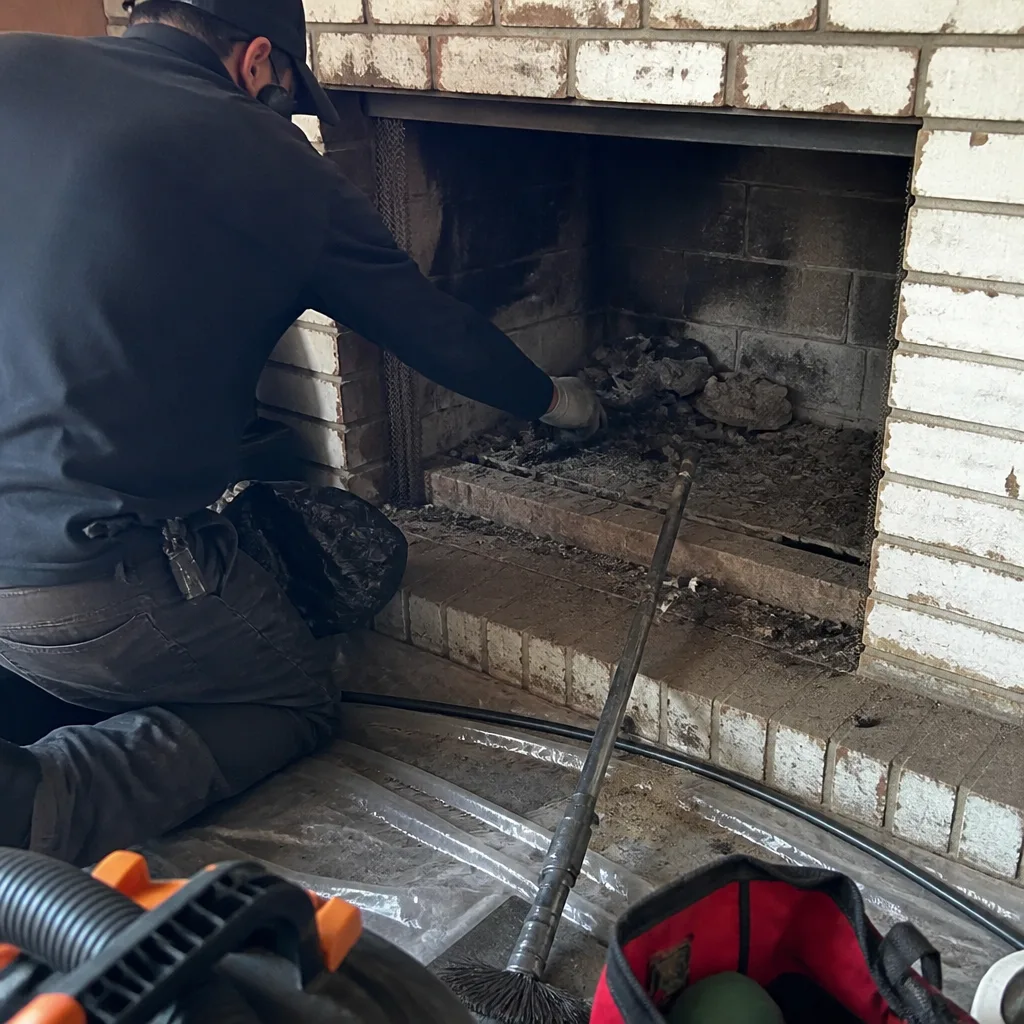
The fourth job is creosote removal and disposal. This is where DIY attempts usually fail. Brushing loosens creosote but doesn’t remove it from the system. The loosened material falls into the smoke shelf, sits there, and creates a more concentrated fire hazard than the original coating did. Removing it properly requires a vacuum with a HEPA filter, access to the smoke chamber, and a containment setup that keeps the dust from migrating into your living room. This is where the line between “saved $200” and “created a fire hazard” gets crossed.
Chino Hills sits in a valley that gets cold winter nights, and homes in neighborhoods like Butterfield Ranch and Payne Ranch burn wood consistently from November through February. The creosote those fires produce doesn’t care whether you spent $40 or $400 on your cleaning setup. It accumulates at the same rate.
The 80% You’re Not Paying For When You Hire a Sweep
When you hire a professional chimney sweep in Chino Hills, the line item on the invoice says “chimney cleaning.” What you’re actually buying breaks down differently than most homeowners assume.
The brush work itself is maybe 20% of the service value. The remaining 80% is knowledge transfer, documentation, and accountability that DIY work cannot replicate, regardless of how thoroughly you clean.
First, a professional sweep inspects as they clean. The brush tells them things: whether the flue liner has cracks, whether the mortar joints between clay tiles are failing, whether there’s a blockage from a bird nest or a fallen cap. A seasoned sweep can feel a flue problem through the brush handle before they ever look at it. That diagnostic information comes free with the cleaning, and it’s worth more than the cleaning itself when it catches a liner failure before it becomes a house fire.
Second, you’re buying documentation. A professional cleaning includes a written report describing the condition of the system, the amount and type of creosote removed, and any recommendations for repair. That document matters for two reasons. It establishes a maintenance history if you ever file an insurance claim, and it creates a paper trail for home sale disclosures. Chino Hills real estate transactions frequently include chimney inspection contingencies, and a documented sweep history smooths that process.
Third, you’re buying the ability to do something about whatever the inspection finds. A sweep-only operator can clean your flue and tell you the liner is cracked, but they can’t fix it. We carry Chimney Repair in Chino Hills capability in-house, including HeatShield liner resurfacing and DuraFlex stainless steel relining. That means a cleaning appointment doesn’t end with a referral to another contractor and another service call fee. It ends with a quote and, if you want, a repair scheduled on the spot.
Fourth, you’re buying liability transfer. When a professional service cleans your chimney and something goes wrong, their insurance is on the hook. When you clean your own chimney and something goes wrong, your homeowners insurance may or may not be on the hook, and the uncertainty there is the expensive part. More on that later.
What a Chino Hills Homeowner Can Safely Do Themselves
The honest answer is that some chimney maintenance tasks are genuinely reasonable for a capable homeowner. We’re not going to tell you everything requires a professional, because it doesn’t, and pretending otherwise is how tradespeople lose credibility with smart customers. If you’re ready to hire help, read our How to Hire a Chimney Cleaning Contractor in Chino Hills: A Step-by-Step Guide. Here’s the specific list.
1. Firebox visual inspection. After the fire is completely out and the ashes are cold (wait at least 24 hours after the last fire), look inside the firebox with a flashlight. Check for cracked or missing firebrick, gaps in the mortar joints, or any signs of rust-colored staining, which indicates water intrusion. If you see damage, document it with photos and get a professional assessment before burning again. This is a five-minute task that catches real problems.
2. Damper operation check. Open and close the damper fully several times. It should move smoothly without grinding. If it’s stuck, don’t force it – a broken damper cable or warped damper plate is a repair job, not a muscle job. A damper that won’t fully close means warm air escaping up the flue all winter, and a damper that won’t fully open means smoke filling your living room when you light a fire.
3. Cap and crown check from ground level. Walk outside, stand where you can see the top of your chimney, and use binoculars if you have them. Look for a missing or damaged chimney cap, cracked or spalling crown concrete, or visible gaps between the cap and the flue tile. Chino Hills gets high winds through the Santa Ana season, and a missing cap is an open invitation for birds, rodents, and rain. This ground-level check catches the obvious stuff. You don’t need to get on the roof.
4. Basic ash removal. Scoop cold ashes into a metal container with a tight-fitting lid, store the container outside away from the house, and dispose of it after at least three days. Never vacuum fireplace ash with a household vacuum unless it’s specifically rated for ash, because embers can smolder for days and a regular vacuum will catch fire. This is fire safety 101, but it’s worth repeating because it causes a surprising number of house fires.
These four tasks, done twice per burning season, cover the surface-level maintenance that prevents the most common non-flue chimney problems. They don’t replace a professional cleaning, and they don’t address creosote, but they do reduce the frequency with which small issues become expensive repairs.
What Looks Like DIY Territory (But Isn’t)
The dangerous zone is the gap between what looks like a simple job and what actually requires training. Several tasks appear approachable in YouTube tutorials but carry risks that aren’t visible in a video.
Flue brushing without containment. The actual brushing motion – push the brush up, pull it down, repeat – is not complicated. Any able-bodied person can do it. The problem is everything else: sealing off the firebox opening, establishing negative air pressure so dust doesn’t migrate through the house, and having a HEPA vacuum running at the point of dust generation. Get this wrong and you’ll spend a weekend cleaning creosote dust off every surface in your living room. Creosote dust is carcinogenic, sticky, and extremely difficult to remove from drywall and fabric.
Anything inside the flue liner. If you can’t see it from the firebox or from the roof with a flashlight, you don’t have the information you need to work on it. Flue liners hide cracks, gaps, and blockages that require a chimney camera inspection to identify. Shoving a brush through a damaged liner can make small cracks into big ones, and it can dislodge loose mortar joints that were holding the system together.
Smoke chamber inspection or repair. The smoke chamber sits above the firebox and below the flue, and it’s one of the most neglected parts of any chimney system. It’s also nearly impossible to inspect properly without specialized equipment. In older Chino Hills homes, we regularly find smoke chambers with corbeled brick construction that would never pass modern code, and those chambers need to be evaluated by someone who knows what they’re looking at.
Anything requiring roof access on a steep pitch. Chino Hills neighborhoods in the hillside areas include homes with rooflines that are genuinely dangerous to walk on without proper fall protection. The money you save on a professional sweep disappears instantly if you fall off your roof and need medical attention. A professional crew carries fall protection and insurance. You carry a ladder and hope.
The Incomplete Cleaning Problem: Why Partial DIY Is Worse Than No Cleaning
This is the section most DIY chimney cleaning articles skip, and it’s the most important point in this entire guide. Here’s the problem in one sentence: brushing creosote loose without removing it from the system is more dangerous than not brushing it at all.
Here’s why. Creosote accumulates on flue walls in three stages. Stage one is a flaky, dusty coating that brushes off easily. Stage two is a shiny, tar-like residue that’s harder to remove. Stage three is a glazed, rock-hard deposit that requires chemical treatment or mechanical removal to break up.
When you run a brush through a flue with stage-one creosote, the material loosens and falls. In a proper professional cleaning, that material falls into the firebox or is captured by a HEPA vacuum pulling air down the flue. The system gets cleaned, the debris gets removed, and the flue is actually safer afterward.
When you run a brush through that same flue without a proper vacuum and containment setup, the loosened creosote falls onto the smoke shelf and into the firebox. You sweep up what you can reach. The rest sits there. Now you have a concentrated pile of creosote in the smoke chamber, which is the worst possible place for it, because the smoke chamber gets hot enough to ignite it during a chimney fire, and it’s harder to access than the flue was in the first place.
Some of it also becomes airborne. Creosote dust, being sticky and fine, settles on curtains, furniture, carpet, and anything else in the room. It stains. It smells. It’s a known carcinogen. And it’s extremely difficult to clean once it’s settled.
We’ve been called to Chino Hills homes where a homeowner attempted a DIY flue brush, realized halfway through that the dust was getting everywhere, and called us to finish the job. The total bill usually ends up higher than a standard cleaning would have cost, because we’re now dealing with loose creosote distributed through the system and the living space, instead of a contained accumulation in the flue.
The takeaway is simple: if you can’t complete the removal, don’t start the brushing. A dirty chimney that’s fully intact is safer than a partially brushed chimney with creosote piled in the smoke chamber.
The Honest Math: DIY Equipment Costs vs. a Professional Sweep
Let’s run the actual numbers for a Chino Hills homeowner who’s serious about doing the job properly. Not the homeowner who buys a $40 brush and calls it done – the homeowner who does it right, with containment, adequate safety gear, and proper disposal.
Here’s what a legitimate DIY chimney cleaning setup costs if you’re buying equipment of reasonable quality:
- Chimney brush set with rods: $45 to $85, depending on flue diameter
- HEPA vacuum rated for fine dust: $150 to $400 (a standard shop vac is not adequate)
- Drop cloths and plastic containment sheeting: $25 to $40
- Dust mask or respirator with P100 filters: $40 to $80
- Safety glasses and gloves: $15 to $25
- Disposal bags and containers: $10 to $20
- Extension ladder if you need roof access: $100 to $250 (or you already own one)
Total realistic first-year cost: $385 to $900. That’s the actual number if you’re buying the equipment needed to do the job without creating a dust problem in your house or a safety problem on your roof.
Second-year cost is cheaper – you own the equipment, so you’re just buying replacement brushes as they wear. But flue brushes wear out surprisingly fast against clay tile liners, and a worn brush stops cleaning effectively long before it looks worn. Most DIYers don’t replace their brushes as often as they should, which compounds the incomplete-cleaning problem described above.
A professional chimney sweep in Chino Hills averages $189 to $329, depending on flue height, creosote condition, and whether additional inspections or minor repairs are included. That includes:
- The cleaning itself
- HEPA vacuum removal of all loosened material
- A documented inspection of the flue, liner, damper, cap, and crown
- A written report you can file with your insurance or home disclosure documents
- Professional liability if something goes wrong
So the honest math works out like this: if you’re planning to clean your chimney yourself for one season, and you’re starting from zero equipment, you’ll spend more on equipment than a professional sweep costs. If you’re committed to doing it yourself for multiple seasons, you’ll break even around year three, assuming nothing goes wrong and you actually complete the job properly each time.
Whether that trade is worth it depends on why you’re considering DIY in the first place. If you enjoy the work and want to learn your system, the equipment investment might make sense. If you’re trying to save money on a single cleaning, the math doesn’t support doing it yourself, despite what the YouTube comments say.
For a one-time or annual cleaning, we recommend Chimney Sweep in Chino Hills for the simple reason that the equipment cost alone exceeds the service price for a first-timer.
Insurance and Liability: What Happens to a Fire Claim After DIY Maintenance
This is the section most DIY guides don’t address, and it’s the one with the highest financial stakes. Here’s the scenario: you clean your own chimney, you do an incomplete job, creosote accumulates where you couldn’t reach it, and six months later you have a chimney fire. The fire department puts it out. Your insurance adjuster comes out and asks for your chimney maintenance records.
What do you have? A receipt from Amazon for a brush and a memory of spending a Saturday afternoon on the roof. What you don’t have is documentation from a professional service showing that the chimney was properly cleaned and inspected at regular intervals. Browse our more guides & resources to learn about protecting your home.
Most homeowners insurance policies cover chimney fires because they’re sudden and accidental events. But insurance companies investigate fire claims, and one of the first questions they ask is about maintenance history. If the homeowner performed their own chimney maintenance without documentation, the adjuster can argue that the fire resulted from improper maintenance, and depending on the policy language, that argument has a reasonable chance of reducing or denying the claim.
This isn’t hypothetical. Insurance industry publications have documented claims denials based on homeowner maintenance failures. The standard of proof the insurer needs isn’t “this was definitely the homeowner’s fault.” It’s “the homeowner cannot demonstrate that the chimney was maintained to professional standards.” Those are different thresholds, and the second one is much easier for an insurance company to meet.
A professional sweep receipt changes the calculus completely. It shows that a trained service cleaned and inspected the system on a documented date. It shifts the maintenance burden from you to a service provider who carries their own insurance. And if the cleaning identified a problem that you chose not to fix, the documentation shows that too, which matters for the opposite reason – the insurance company can see that you were informed and made a decision.
Chino Hills homeowners should also know that California’s fire codes treat chimneys differently depending on construction type and clearance zones. Homes in the hillside interface areas have additional requirements during high fire danger periods. A professional service familiar with Chino Hills code requirements will flag compliance issues that a homeowner reading a DIY forum post would never encounter.
The bottom line on liability: the $189 to $329 you pay for a professional cleaning is partly for the cleaning and partly for the documentation. That documentation is worth far more than the cleaning if you ever have a fire.
Common Mistakes to Avoid
- Using a regular household vacuum for ash removal. Live embers can smolder in ash for several days, and a standard vacuum has no protection against hot particulate. Use only a vacuum specifically rated for ash, or better yet, use a metal scoop and a metal bucket with a tight lid, and store it outside for 72 hours before disposal.
- Brushing the flue without a HEPA vacuum running. Creosote dust migrates through the house and settles into fabric, drywall, and carpet. It’s sticky, it smells like smoke indefinitely, and it’s a carcinogen. If the vacuum isn’t running, don’t brush.
- Forcing a damper that’s stuck. Damper plates and cables break under force. A stuck damper usually means a warped plate or rusted pivot, which is a repair job, not a forcing job. Pushing a jammed damper can leave you with a damper stuck in the closed position, which means no fires all winter without a repair call.
- Buying a brush without measuring the flue. Flue sizes vary, and a brush that’s too small won’t clean effectively while a brush that’s too large can damage the liner or get stuck. The brush diameter needs to match the flue within a narrow tolerance, which requires measuring from the roof or using a sizing chart based on your fireplace model.
- Assuming a visual inspection from the firebox is enough. The smoke chamber and upper flue are not visible from the firebox. Neither is the cap interior from the ground. Problems in those areas go undetected until they become visible through other means, like water stains on the ceiling or smoke backing up into the house.
- Cleaning a chimney without establishing whether there are blockages first. Bird nests, dead animals, and debris blockages are common in Chino Hills chimneys, especially after high wind events. Brushing a blocked chimney pushes the blockage deeper into the system and compacts it, making removal harder and more expensive than it would have been with an initial inspection.
- Skipping the documentation step. Even if you do a reasonable DIY job, you have no paper trail for insurance or resale purposes. A professional cleaning receipt is a document with evidentiary value. Your memory of doing it yourself is not.
When to Call a Professional
If you’ve noticed any of the following in your Chino Hills home, skip the DIY route and get a professional assessment before your next fire:
- Smoke backing up into the house when the damper is open
- A strong smoke smell in the house even when the fireplace hasn’t been used recently
- Visible creosote accumulation that’s shiny or tar-like (stage two or three creosote)
- Water stains on the ceiling near the chimney, or water in the firebox after rain
- Cracked or missing firebrick, or gaps in the mortar joints in the firebox
- Any indication of animal activity: scratching sounds, nesting debris, visible droppings
- You’ve owned the home for more than a year and have never had the chimney inspected
These signs point to problems that require a professional evaluation and possibly repair work. The cleaning itself may be the simple part; the underlying issue is usually what matters. Chimney Sweep Chino Hills offers free estimates in Chino Hills – call (877) 358-0941 and we’ll tell you honestly whether a sweep is all you need or whether there’s something else going on. Our approach is simple: we show you what we find before we recommend what to fix. If the flue is clean, we’ll tell you that too.
Frequently Asked Questions
A standard chimney sweep in Chino Hills typically costs between $189 and $329, depending on the flue height, creosote condition, and whether additional work like cap replacement or a camera inspection is included. The price includes the cleaning, waste removal with a HEPA vacuum, and a documented inspection report. Call (877) 358-0941 for an exact quote – estimates are free.
The National Fire Protection Association recommends a professional chimney inspection at least once per year, and cleaning whenever creosote accumulation reaches 1/8 inch thick. In practical terms, most Chino Hills homeowners with regular winter fireplace use need a cleaning every one to two years. If you burn green or unseasoned wood, or if you use your fireplace as a primary heat source, annual cleaning is the safer schedule.
You can buy the brush, but the brush is only about 20% of what a professional cleaning involves. A proper DIY chimney cleaning requires the brush, a HEPA vacuum rated for fine dust, containment sheeting, a respirator, and the knowledge to assess whether the flue liner is in good enough condition to withstand brushing. The realistic equipment cost for a first-time DIYer exceeds the cost of a professional sweep, and an incomplete job is more dangerous than no cleaning at all.
Creosote accumulates inside the flue and on the smoke chamber walls. Over time, that creosote can ignite, causing a chimney fire. Chimney fires burn hot enough to crack clay tile liners and melt mortar joints, and they often spread to the roof structure before the homeowner even realizes what’s happening. Beyond the fire risk, a dirty chimney produces less draft, sends more smoke into the house, and accelerates liner deterioration. The $200 cleaning is cheaper than any of the possible outcomes.
Not always. This is the legitimate concern that makes homeowners hesitate to call a chimney service in the first place. Our position is simple: we don’t recommend liner work unless we can show you camera footage of the damage. If the liner is intact but dirty, a cleaning is all you need. If we recommend repair or replacement, it’s because we have visual evidence – and we’ll show it to you before asking for a decision. For liner repair, we use Chimney Repair in Chino Hills services including HeatShield resurfacing and DuraFlex stainless steel relining, and we’ll explain which option fits your situation and why.
They’re separate systems – a chimney vents fireplace exhaust while a dryer vent exhausts the clothes dryer – but the failure mode is similar. Both involve lint or creosote accumulation that restricts airflow and creates a fire hazard. We offer Dryer Vent Cleaning in Chino Hills alongside chimney services because many homeowners schedule both in the same appointment, and both fall under the same fire-safety category. Lint buildup is the leading cause of dryer fires, and a clogged dryer vent also drives up energy costs by forcing the dryer to work harder than it should.
Look for a service that documents what they find, uses professional-grade equipment including HEPA filtration, and is capable of handling repairs if they identify damage. A sweep-only operator can clean your flue but can’t fix a cracked liner, which means a second contractor and a second service call. Ask whether they use a chimney camera for inspections. Ask whether they provide a written report. And ask whether they handle repairs in-house. Those three questions will filter out most of the operators you don’t want on your roof.
The Bottom Line
The DIY-versus-professional chimney cleaning decision isn’t about whether you’re capable of pushing a brush up a flue. It’s about whether you’re equipped to handle everything else: the containment, the inspection, the documentation, and the liability. In Chino Hills, the realistic equipment cost for a proper DIY job exceeds the cost of one professional cleaning, and an incomplete DIY job creates a hazard that a dirty but intact chimney didn’t have. The surface-level tasks – ash removal, damper check, ground-level cap inspection – are reasonable for any homeowner and worth doing regularly. Everything else is better left to someone who does it for a living, wears the right gear, and stands behind the work with documentation you can file away. Sweep. Inspect. Repair. That’s the full-service approach from our Chimney Sweep Chino Hills home base, and it’s why we’d rather tell you honestly what you need than sell you a service you don’t.
Written by the team at Chimney Sweep Chino Hills, serving Chino Hills since 2017.
See the difference
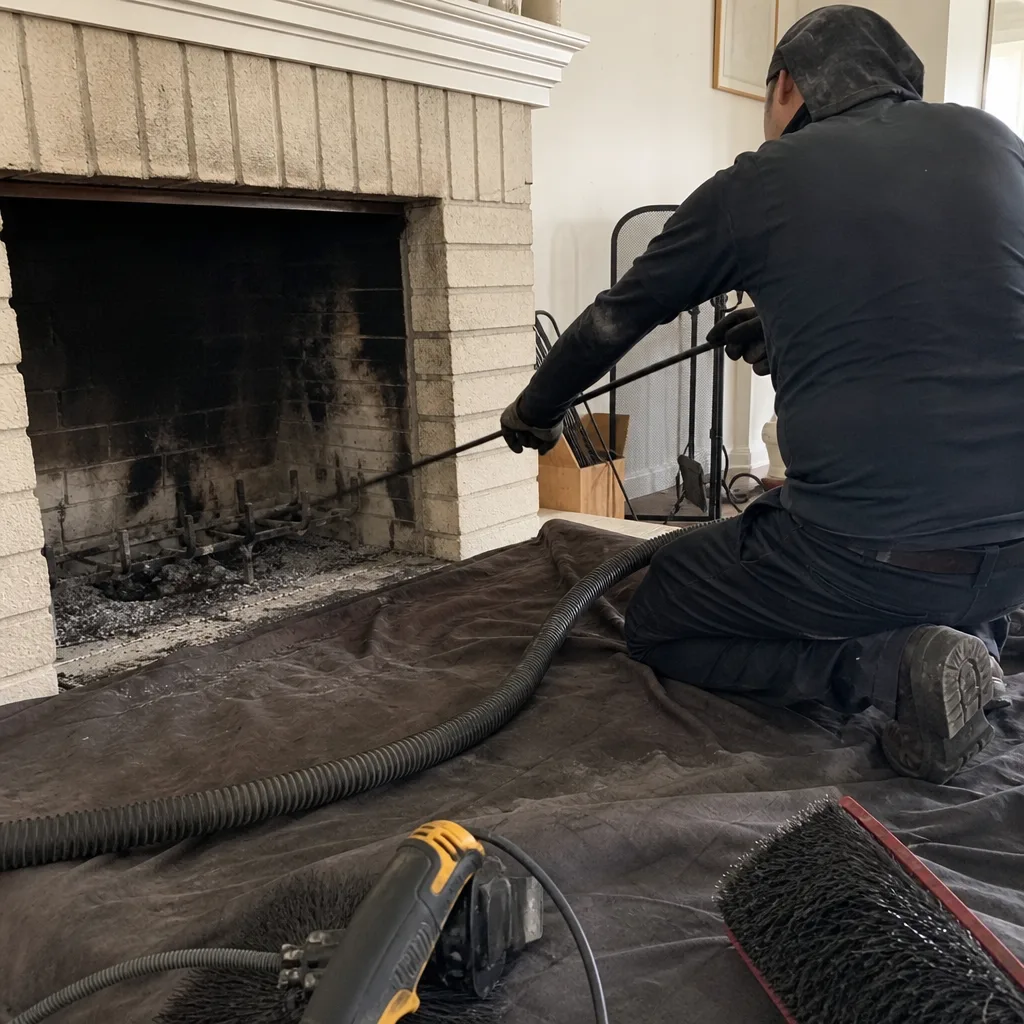 Before
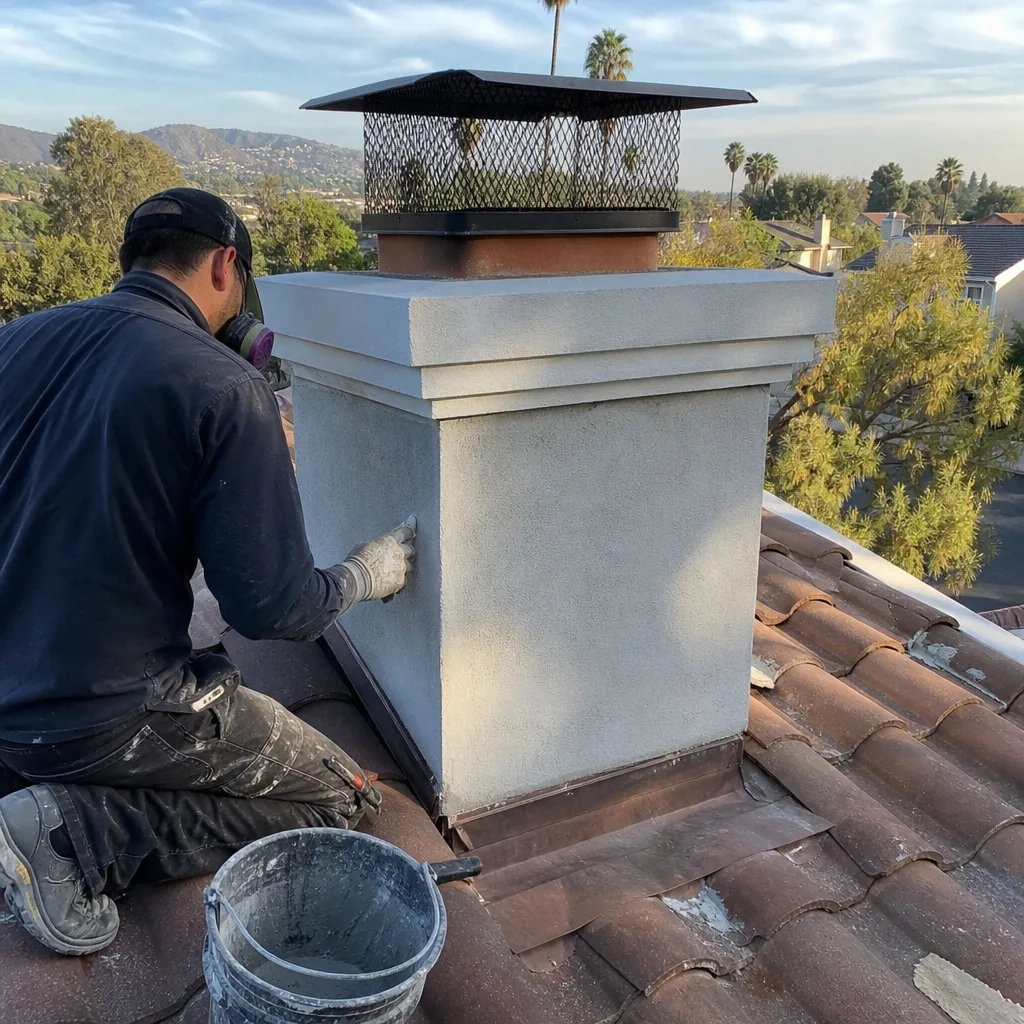 After
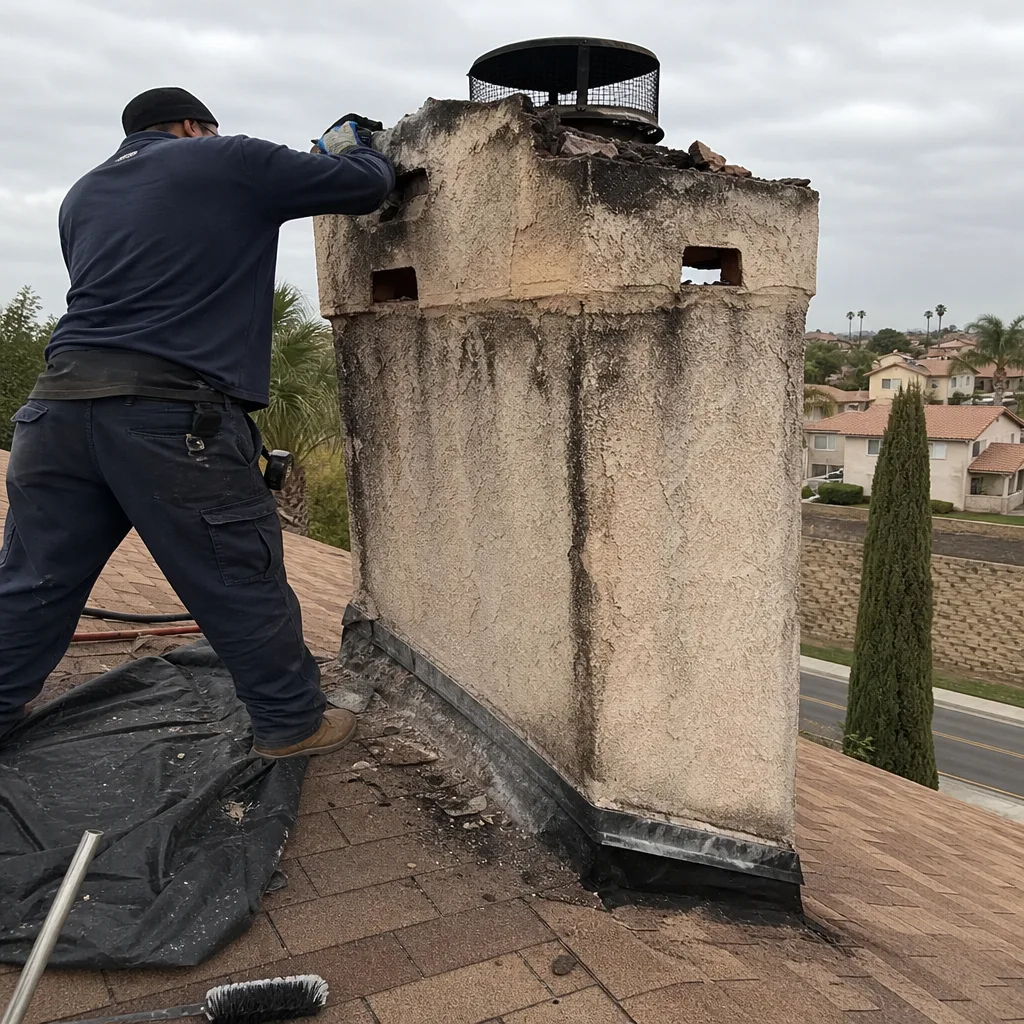 Before
 After
 Before
 After